
Audi RS7 Stage 2 Transformation: From Issues to 445kW of Twin-Turbo Power
The Audi RS7 is already a weapon straight out of the factory. A twin-turbo 4.0L V8, quattro grip, and effortless speed—it’s a platform built for serious performance. But like most high-performance cars, there’s always more to unlock when the right combination of parts and tuning comes together.
This particular RS7 came into the workshop for our Stage 2 package, but it wasn’t just a straightforward upgrade. Before we could even think about pushing more power, we had to address a few underlying issues holding the car back.

Diagnosing the Problem
On initial inspection and baseline dyno runs, the car wasn’t performing where it should have been. Instead of jumping straight into modifications, we took the time to properly diagnose the setup.
We found a few key issues:
Worn spark plugs
Weak coil packs
A faulty oxygen sensor
These components might seem small, but on a twin-turbo platform like the RS7, they make a massive difference. Poor ignition and inaccurate sensor data can limit power, affect air-fuel ratios, and ultimately hold the entire build back.
Once replaced, the car was finally ready to perform the way it should.

Stage 2 Package Setup
With the health of the engine sorted, we moved into the performance upgrades:
High-flow intake system
Upgraded downpipes
Custom ECU tune
TCU (transmission) calibration
This combination is the foundation of a proper Stage 2 build. Improving airflow in and out of the engine allows the turbos to operate more efficiently, while the ECU and TCU tuning bring everything together—optimising boost, fueling, ignition timing, and shift strategy.
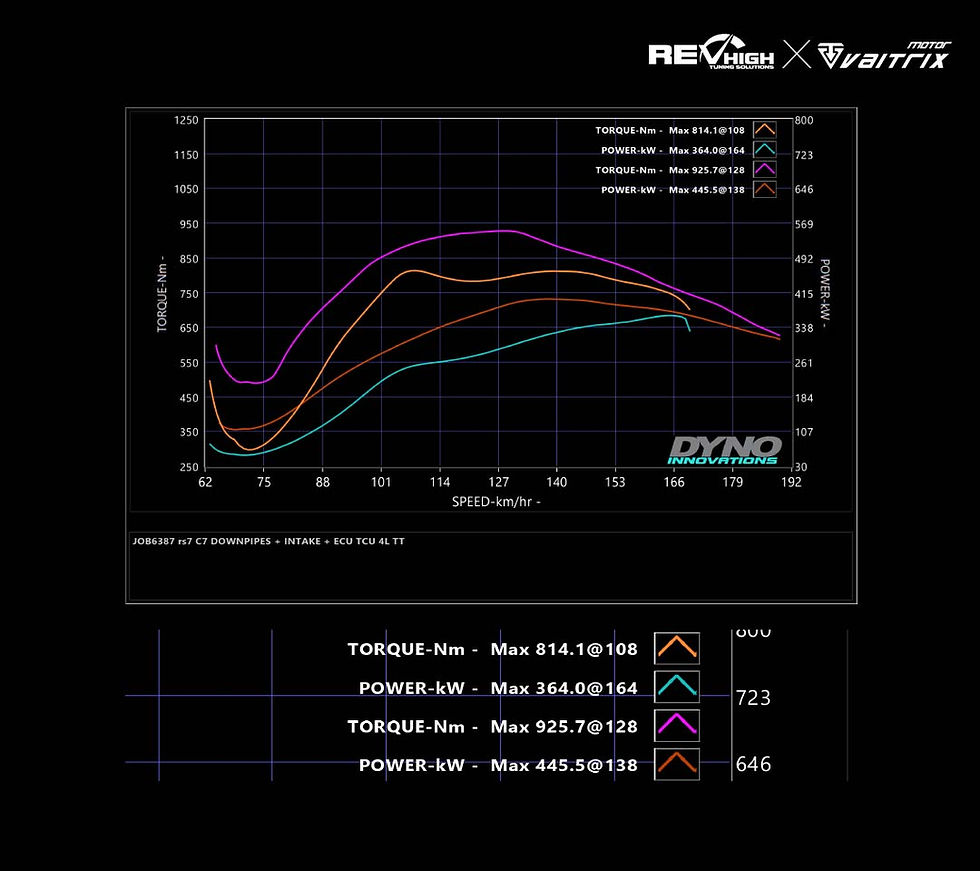
Dyno Results: Before vs After
With everything dialed in, we put the RS7 back on the dyno to see the results.
Before:
364.0kW
814.1Nm
After:
445.5kW
925.7Nm
The gains are substantial, but more importantly, they’re usable. This isn’t just about peak numbers—it’s about how the car delivers power across the entire rev range.
More Than Just Numbers
What really stands out after the build is how the car behaves on the road.
Throttle response is sharper, boost comes on stronger, and the mid-range pull is significantly more aggressive. The added torque transforms the driving experience, making the car feel lighter, faster, and far more responsive under load.
The TCU tune also plays a huge role here. Gear shifts are quicker and more decisive, keeping the engine right in the power band where it performs best.

Visual Transformation
With the hood open, the upgraded intake setup gives the engine bay a much more purposeful look. Paired with the aggressive tone from the upgraded downpipes, the RS7 now not only performs like a true Stage 2 build—it sounds the part as well.
Your dyno graphs tell the story clearly, showing a strong and consistent increase in both power and torque across the rev range. It’s the kind of result that reflects a properly executed build, not just a quick upgrade.
Final Thoughts
This RS7 is a perfect example of why proper diagnosis comes before performance. Fixing the underlying issues first allowed us to extract the full potential of the Stage 2 setup without compromise.
From a car that wasn’t performing at its best to a 445kW powerhouse, the transformation speaks for itself.
And as always—this is just the beginning.


Comments